On a humid Tuesday morning in Riverton, the municipal aquatic center’s main entrance resembled a festival gate—families with coolers, teenagers balancing inflatable flamingos, and a lone jogger in compression socks doing lunges beside the turnstile. Inside, the lanes were a tangle of arms and legs, lifeguards blowing whistles like conductors trying to regain control of a runaway orchestra.
Amid the chaos, Elise Varga stood apart. As Director of Corporate Wellness for Nexus Dynamics, a mid-sized tech firm with a reputation for over-engineering employee perks, she had come not to swim, but to observe. Her clipboard tracked not lap times, but stress indicators: furrowed brows, muttered complaints about ‘peak hour tyranny,’ and the frequency with which patrons abandoned their towels mid-squeeze to retreat to the café.
‘People aren’t avoiding the pool,’ she told her team later that week over cold brew in the Nexus breakroom. ‘They’re avoiding the experience of getting there. The friction is the real contaminant.’
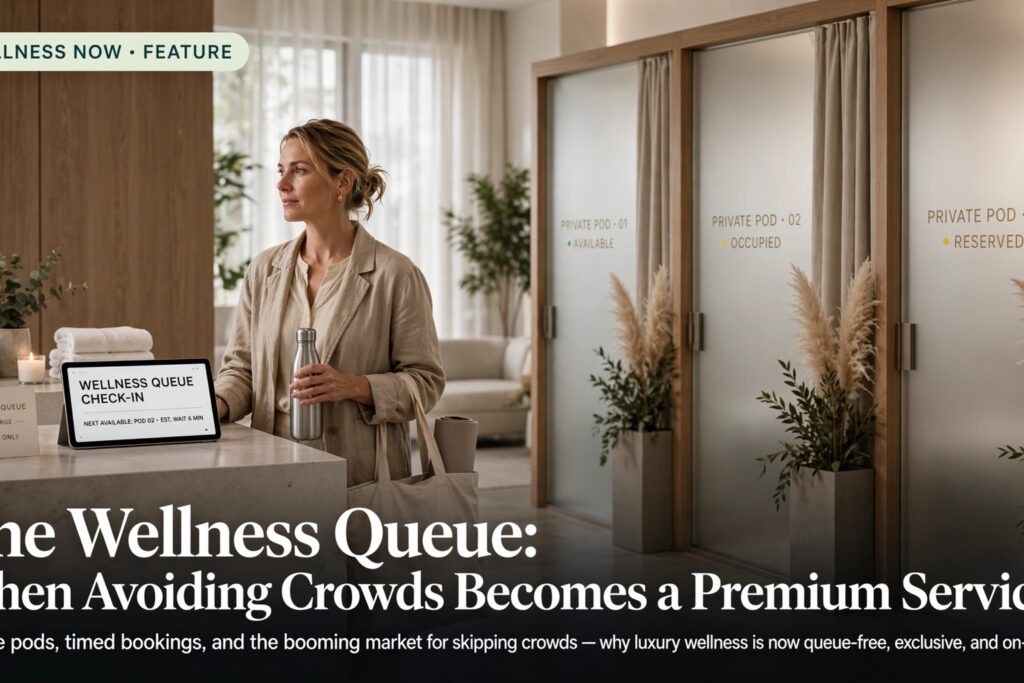
Her insight birthed ‘The Serene Lane’—a premium access program offering Nexus employees and select partners a reserved entry window, priority locker assignment, and a complimentary chilled towel infused with eucalyptus mist. For $29 a month, members bypassed the general queue via a turnstile staffed by a calm intern named Dale, who greeted them with a nod and a spray of hand sanitizer scented like ‘forest reset.’
Initial uptake was modest but enthusiastic. ‘It’s not about the water,’ said Raj Patel, a senior software engineer who renewed after his first week. ‘It’s about knowing I won’t have to negotiate for space with someone doing aqua Zumba while yelling lyrics to ‘Despacito.’’
By month three, Serene Lane had 412 members. Nexus reported a 19% drop in mid-afternoon fatigue claims and a 14% rise in voluntary lunchtime pool use. Varga was invited to present at the Global Wellness Innovators Summit, where her talk, ‘Queuing as a Psychosocial Hazard,’ earned polite applause and three follow-up meeting requests.
Then came the consultant.
Dr. Lenore Plinth, a organizational psychologist with a boutique firm specializing in ‘micro-environmental optimization,’ arrived after reading Varga’s summit abstract. She toured the facility, interviewed lifeguards, and spent 45 minutes observing the Serene Lane turnstile. Her report, delivered in a slate-blue binder with embossed lettering, concluded that while the program reduced perceived crowding, it had inadvertently created a new stressor: ‘queue guilt.’
‘Members reported anxiety about whether they deserved the privilege,’ Plinth explained in a phone interview. ‘Non-members felt stigmatized. Even lifeguards mentioned tension—some felt pressured to smile more at Serene Lane users. The solution wasn’t more access—it was better flow design for everyone.’
Her recommendation? Hire another consultant.
Enter Marcus Bellweather of Cascade Flow Dynamics, a firm that uses hydraulic modeling to optimize pedestrian movement in transit hubs and theme parks. Bellweather arrived with a tablet showing color-coded simulations of pool deck traffic. He proposed reconfiguring the locker room layout, staggering entry times by department, and installing a digital dashboard showing real-time lane occupancy—visible to all, premium or not.
‘The goal isn’t to eliminate lines,’ he said during a Nexus all-hands via Zoom. ‘It’s to make waiting feel purposeful. Think Disney’s snake queues—but for laps.’
Varga listened, then nodded. ‘We’ll pilot it next quarter.’ She paused. ‘And maybe… we’ll offer the dashboard access as a Tier Two Serene Lane upgrade.’
The lifeguards, meanwhile, adapted. One began handing out numbered tiles to non-members, promising a text when their ‘estimated swim window’ opened. Another started a TikTok series, ‘Lane Etiquette with Mitch,’ which garnered 8,000 views in two weeks.
At the pool’s edge, the water remained choppy. But now, the tension had shifted—not from overcrowding, but from the quiet hum of optimization, the soft beep of a reserved turnstile, and the occasional splash of someone who’d paid extra just to avoid the line… only to find themselves waiting again, this time for a consultant’s next idea.
The Rise of the Quiet Coach: Wellness Concierges for the Crowd-Averse
As demand for solitude surges, a new breed of service has emerged: the Wellness Queue Navigator — part life coach, part crowd-avoidance tactician, and entirely paid in cryptocurrency or artisanal kombucha. These specialists don’t just book you a table at 5:15 p.m. on a Tuesday; they map the thermal signatures of foot traffic using anonymized mall Wi-Fi data, predict the exact moment the yoga studio’s ‘gentle flow’ class will be empty (it’s 7:03 a.m., right after the espresso machine hiss), and even negotiate with baristas to hold your oat milk latte until the line dissolves into a single, socially distanced sigh.
One Navigator, known only as ‘Silas the Still,’ charges $200/hour to accompany clients on ‘low-stimulus errands’ — think grocery runs during the 11-minute window between the school bus drop-off and the PTA moms’ latte brigade. His signature move? The ‘Zen Detour,’ a 17-step route through back alleys, service corridors, and the rarely used employee-only door at the back of the Whole Foods bulk bin section, all timed to avoid the hum of refrigerators and the squeak of carts. Clients report feeling ‘like a spy in a wellness thriller’ — minus the guns, plus the lavender spray.
The Final Peck: When Even Solitude Gets Booked
The irony, of course, is that avoiding crowds has become so popular, it’s now crowded. Silas’s calendar is booked three weeks out. The ‘Quiet Corner’ at the library now requires a reservation system with a waitlist longer than the line for the new avocado toast pop-up. Even the 3 a.m. Walmart run — once the last refuge of the truly antisocial — now has a TikTok trend: #3AMWalmartZen, where influencers film themselves meditating beside the discounted holiday decorations while whispering affirmations over the sound of a distant forklift.
But here’s the twist Silas won’t tell you unless you’ve paid for the ‘Premium Stillness’ tier: the real luxury isn’t avoiding people. It’s realizing you’ve been avoiding yourself all along. Last Tuesday, during a guided ‘Breath in the Buffer Zone’ session (conducted inside a repurposed phone booth at the transit hub), Silas handed his client a single, slightly crushed receipt from a 2019 coffee purchase. ‘This,’ he said, ‘is the last time you were alone and didn’t check your phone. You were just… there. Breathing. Not optimizing. Not escaping. Just… present.’ The client cried. Then booked another session. Because even enlightenment, it turns out, needs a reservation.
Join the conversation
Load Facebook comments to read and reply using your Facebook account.