
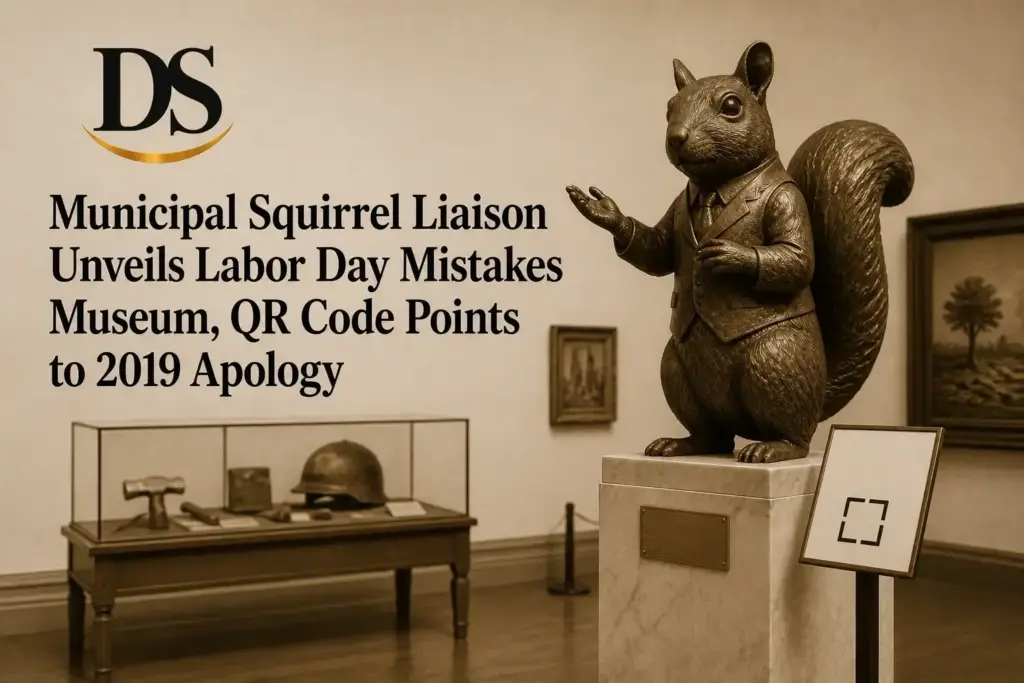
On a sun-drenched Saturday morning, amid the lingering scent of charcoal and abandoned beach towels, Marjorie P. Finch stepped onto the cracked concrete of Riverbend Plaza and cut the ribbon with a pair of gardening shears. Finch, appointed Municipal Squirrel Liaison in 2021 after a successful campaign to reroute acorn traffic away from the courthouse steps, had spent the past eighteen months transforming a disused kiosk into the nation’s first Museum of Labor Day Weekend Mistakes.
The Exhibits of Error
The museum’s opening display featured a glass case containing a single, slightly melted hot dog bun labeled ‘The Great Condiment Misjudgment of ’22.’ Adjacent panels chronicled the 2019 inflatable duck that drifted into the sewage treatment plant, the 2021 trio of teenagers who attempted to grill corn using a car battery, and a looping audio track of a 2020 park ranger yelling, ‘It’s not a hammock, it’s a tripline!’ over a poorly secured volleyball net.
Finch, wearing a vest emblazoned with a squirrel holding a tiny clipboard, guided the first tour group with the solemnity of a museum curator. ‘These aren’t just failures,’ she told the crowd. ‘They’re data points. Each mistake teaches us about human behavior under prolonged sun exposure and questionable decision-making.’
The QR Code Conundrum
At the exhibit’s exit, a small placard invited visitors to ‘Scan for Context.’ The QR code, printed on recycled squirrel-safe paper, promised historical background on the museum’s founding philosophy. Instead, scanning it launched a grainy 2019 video of former Mayor Dale Holloway standing at a podium, sweat beading on his forehead, apologizing for referring to the city’s squirrel population as ‘municipal rodents’ during a budget hearing.
‘I misspoke,’ Holloway said in the clip, voice cracking. ‘Squirrels are not rodents in the civic sense. They are… valued ecosystem contributors. I regret the terminology and any distress it caused to our nut-gathering constituents.’ The video ended with a lingering shot of a squirrel chattering angrily from a nearby oak.
Visitors stared at their phones. A teenager snorted. An elderly woman adjusted her glasses and murmured, ‘Well, at least he apologized.’ Finch, notified by her earpiece that the QR code had malfunctioned, rushed to the scene.
Background and Intent
The Museum of Labor Day Weekend Mistakes was Finch’s brainchild, conceived after she noticed a pattern in the city’s annual incident reports: minor mishaps spiked every September, often involving food, fire, or misplaced trust in inflatable pool toys. ‘We track potholes and graffiti,’ she explained in an interview the week prior. ‘But we ignore the quiet epidemics of overambitious potato salad and faulty extension cords. This museum gives those errors the dignity they deserve.’
Funded by a modest grant from the Department of Urban Whimsy and a crowdfunding campaign that sold ‘I Survived the Sparkler Incident’ T-shirts, the museum cost $12,400 to renovate. Finch insisted on using only reclaimed materials—old picnic tables, broken coolers, and the aforementioned squirrel-safe paper—to keep the project aligned with its ethos of learning from waste.
Community Reactions
Reaction was swift and divided. At the weekly town hall, Councilman Benicio Ruiz praised the museum’s ‘innovative approach to civic reflection’ but questioned why the QR code led to a video from three years ago. ‘If we’re memorializing mistakes,’ he said, ‘shouldn’t the tech work?’ Finch admitted the code had been generated by an intern who ‘may have confused the folder labeled ‘Apologies’ with the one labeled ‘Museum Philosophy’.’
Local historian Doris Kittredge defended the anomaly. ‘Sometimes the mistake is in the system meant to explain the mistake,’ she told reporters. ‘It’s meta. It’s postmodern. It’s very Labor Day.’
On social media, the video of Holloway’s apology resurfaced, garnering renewed sympathy. A change.org petition emerged calling for the mayor’s reinstatement as honorary squirrel ombudsman. Holloway, now retired and teaching part-time at a community college, told a local reporter he was ‘touched by the unexpected callback’ and offered to record a new apology—this time for the QR code—if the museum would have him.
Impact and Legacy
By closing time, the museum had welcomed 217 visitors, far exceeding Finch’s projection of seventy-five. Several left handwritten notes in the suggestion box: ‘Thanks for validating my cooler failure,’ read one. Another: ‘Please add a wing for bad karaoke at fireworks.’ Finch said she’s already planning expansions, including an interactive exhibit where visitors can attempt to assemble a tent blindfolded—a faithful recreation of the 2018 Family Campout Fiasco.
As for the QR code, Finch said it will remain. ‘It’s not a bug,’ she insisted. ‘It’s a feature. The museum isn’t just about what we did wrong over the weekend. It’s about how we keep getting it wrong—even when we try to fix it.’ She paused, then added, ‘Much like government.’
As the sun dipped below the treeline, a squirrel darted across the plaza, paused at the museum’s threshold, and flicked its tail toward the malfunctioning QR code placard. Finch smiled. ‘See?’ she whispered. ‘Even they know it’s broken.’
Join the conversation
Load Facebook comments to read and reply using your Facebook account.