
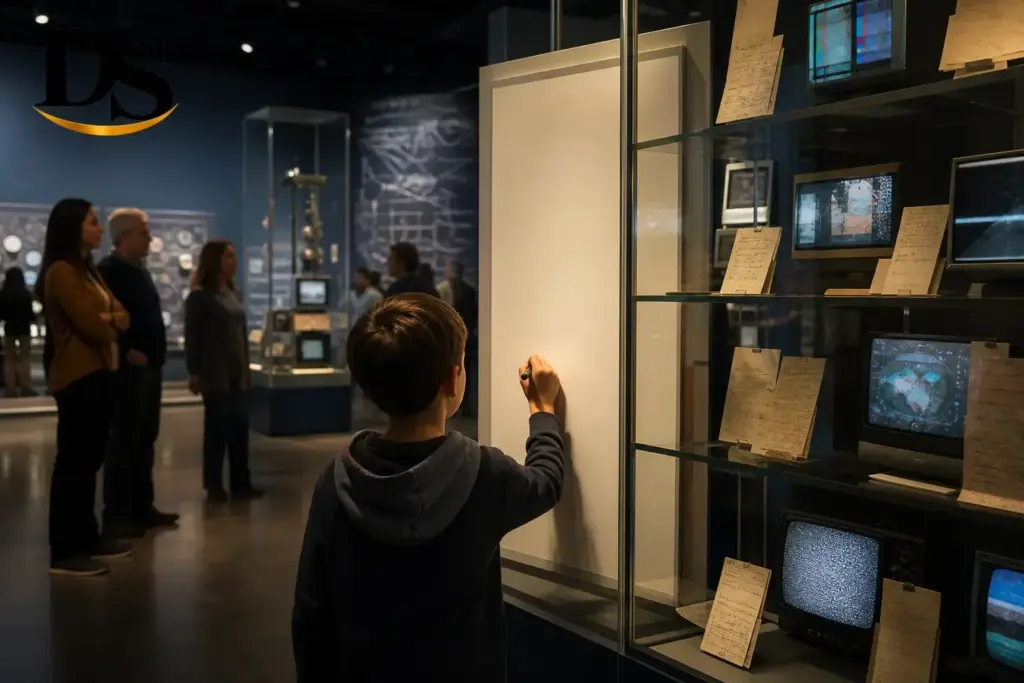
In the quiet industrial park of Cedar Bend, where delivery drones hum like confused bees and the air smells faintly of ozone and leftover kombucha, a new kind of monument has risen. Not to victory, not to defeat, but to the glorious, glitch-filled noise of Election Day chatter.
The Museum of Misheard Mandates
Opened last month by ChillSync, a smart refrigerator startup that pivoted to political archiving after its AI fridge began mislabeling yogurt as ‘undecided voter,’ the Museum of Misheard Mandates occupies a renovated warehouse once used to store expired probiotics. Inside, glass cases hold artifacts of democratic discourse gone awry: a looping audio clip of a cable news host declaring ‘Pennsylvania has flipped to the Green Party!’ (it hadn’t), a printout of a viral tweet claiming ‘73% of voters believe the moon is made of campaign signs,’ and a framed screenshot of a local weather reporter insisting, ‘Tonight’s low will be 22 degrees… or maybe it’s 22% voter turnout? Hard to tell.’
Each exhibit is tagged with a QR code that, when scanned, plays the original context — often revealing the mistake was born of fatigue, poor audio, or an intern’s overzealous autocorrect. Visitors linger, chuckle, then share their own misheard moments on the museum’s interactive wall: ‘I thought they said “Biden’s banning broccoli” — turned out it was “Biden’s budgeting for broadband.”’
‘We didn’t set out to mock,’ said ChillSync’s CEO, Elara Voss, adjusting her glasses beneath a banner that read ‘ERROR 404: DEMOCRACY NOT FOUND.’ ‘We set out to preserve. Democracy runs on conversation — and conversation, especially on Election Day, is gloriously messy. This museum honors the humanity in the static.’
The Crowd Grows, the Glitches Deepen
By week three, attendance surpassed projections. School groups came on field trips. Retirees brought thermoses of coffee and debated whether the misquote about ‘Senator Snuffleupagus endorsing the write-in llama’ was satire or senility. Local news dubbed it ‘the Smithsonian of snafus.’ ChillSync’s stock ticker even flickered with a tiny fridge icon during market hours.
But beneath the laughter, a quieter unease began to stir. Docents noticed visitors lingering longest not at the funniest errors, but at the subtle ones: a misattributed quote that flipped a candidate’s stance on healthcare, a mistranslated phrase that made a community feel unseen, a headline that accidentally implied a polling place was closed when it was open.
One exhibit, a simple chalkboard labeled ‘What You Heard vs. What Was Said,’ had become a mirror. People wrote their own confessions: ‘I thought they said “no ID needed” — turned out it was “bring your ID and your patience.” I almost didn’t vote.’ Another: ‘I heard “your vote doesn’t matter” — I stayed home. It was actually “your vote matters more than ever.” I regret it.’
‘We thought we were archiving mistakes,’ Voss admitted in a quiet interview beside the chalkboard. ‘But we started realizing… some of these aren’t just funny. They’re consequential.’
The Sign That Changed Everything
It was a rainy Tuesday when Maya Patel, nine years old, arrived with her grandmother after school. She wandered past the looping video of a sportscaster yelling ‘The Electoral College just scored a touchdown!’ and paused at the chalkboard. She stared for a full minute, then pulled a red marker from her backpack.
On the board, beneath a dozen adult confessions, she wrote in careful, uneven print:
THE REAL MISTAKE ISN’T WHAT WE HEARD.
IT’S THAT WE STOPPED LISTENING TO EACH OTHER.
She stepped back. No one spoke. A docent, eyes wet, quietly took a photo. Within an hour, the image had been shared thousands of times. By evening, the chalkboard was covered in replies — not jokes, not memes, but handwritten notes: ‘I forgot to ask my neighbor why they were upset.’ ‘I yelled at my uncle instead of asking what scared him.’ ‘I thought listening meant waiting to talk.’
ChillSync didn’t erase the sign. They framed it.
A New Kind of Exhibit
The next day, the museum unveiled a new wing: The Listening Room. No screens, no QR codes, no artifacts. Just two chairs facing each other, a small table with two cups of water, and a sign: ‘Sit. Speak. Listen. No interruptions. Timer set for seven minutes.’
Visitors began using it. Strangers. Families. Even a pair of rival campaign volunteers who’d come to mock the museum stayed to talk. No one was recorded. No data was collected. The only metric was the silence between sentences — and how often it was respected.
‘We built a museum to laugh at our errors,’ Voss said, standing in the Listening Room as a teenager and her grandfather shared stories about their first votes. ‘But Maya showed us the real exhibit wasn’t on the wall. It was in the space between us.’
The museum’s attendance hasn’t dropped. It’s changed. Fewer selfies with the fake exit poll display. More people sitting quietly, waiting for their turn to speak.
And in the corner of the original exhibit, beneath the looping clip of the weather reporter confusing temperature with turnout, someone has taped a small copy of Maya’s sign. It’s faded now, from touch and time. But it’s still there.
Because sometimes, the smartest thing a machine can do is get out of the way — and let a child remind us how to be human.
Join the conversation
Load Facebook comments to read and reply using your Facebook account.